
What Is Ayurveda?
It is a question we are asked more than almost any other. Interest in this ancient Indian healing system has grown enormously over the past decade — driven by a growing recognition that modern medicine, for all its extraordinary achievements, does not have adequate answers to the epidemic of chronic stress, digestive dysfunction, sleep disruption, and systemic inflammation that characterises life in the 21st century.
Ayurveda does. And it has done so for over five thousand years. This guide explains everything you need to know — what Ayurveda is, how it works, what the doshas are, what Panchakarma involves, and how to find the right Ayurveda retreat to experience its benefits for yourself.
What Is Ayurveda — The Basics
Ayurveda — from the Sanskrit words ayur (life) and veda (knowledge or science) — is the traditional medicine system of the Indian subcontinent. With written roots in the Vedic period dating back over 5,000 years, and codified in foundational texts including the Charaka Samhita and the Sushruta Samhita, it is one of the world’s oldest and most comprehensive systems of holistic medicine.
Unlike modern Western medicine — which is primarily disease-focused, addressing pathology after it has already manifested — Ayurveda is fundamentally a system of prevention and optimisation. Its primary question is not ‘how do we treat this illness?’ but ‘what are the conditions that allow this person to maintain their natural state of health?’
The Ayurvedic understanding of health is not simply the absence of disease. It is a state of dynamic equilibrium — between the body and its environment, between the individual and the natural rhythms of the day, the seasons, and the stages of life. When this equilibrium is maintained, health flows naturally. When it is disrupted — by poor diet, irregular sleep, excessive stress, environmental factors, or suppressed emotions — the conditions for illness are created.
Ayurveda’s role is to understand precisely how that equilibrium has been disrupted in each individual, and to restore it through a combination of diet, lifestyle, herbal medicine, therapeutic treatments, yoga, and meditation.
The Five Elements — Ayurveda’s Foundational Framework
At the foundation of Ayurvedic philosophy is the understanding that the universe — and the human body — is composed of five fundamental elements: earth (prithvi), water (jala), fire (tejas), air (vayu), and space (akasha). These are not meant to be taken literally as physical substances, but as principles — the qualities of density and solidity, fluidity and cohesion, transformation and heat, movement and lightness, and expansion and emptiness.
In the human body, these five elements combine in specific ways to create the three doshas — the bio-energetic forces that govern all physiological and psychological functions. Understanding how these doshas manifest in your own body and mind is the key to understanding your health in the Ayurvedic framework.
The Three Doshas — Understanding Your Unique Constitution
The concept of the three doshas is central to everything in Ayurveda — from the foods that will support your health to the treatments that will be most beneficial, from the daily routine that will keep you in balance to the early warning signs of imbalance to watch for. Understanding your doshas is the beginning of understanding yourself in an entirely new way.
Vata — The Dosha of Movement
Composed of air and space, Vata governs all movement in the body and mind — the circulation of blood, the movement of the breath, the transmission of nerve impulses, the movement of food through the digestive tract, and the movement of thoughts through the mind.
Vata in balance:
Creative, enthusiastic, quick-thinking, light, flexible, adaptable, communicative, and full of energy. Vata types are often artists, communicators, and innovators — naturally drawn to movement, variety, and new experiences.
Vata out of balance:
Anxious, scattered, overwhelmed, insomniac, constipated, dry skin, joint pain, poor circulation, and a tendency to feel cold. Vata imbalance is the most common presentation in modern urban life — characterised by overstimulation, irregular routines, too much screen time, insufficient sleep, and chronic low-grade anxiety.
Vata is aggravated by:
Irregular routines, cold and dry weather, excessive travel, stimulant foods and drinks, insufficient sleep, overwork, and chronic stress.
Vata is balanced by:
Warmth, routine, nourishing and grounding foods, oil massage (Abhyanga), rest, gentle yoga, and slowing down.
Pitta — The Dosha of Transformation
Composed of fire and water, Pitta governs all transformative processes in the body and mind — digestion and metabolism, the transformation of experience into understanding, the processing of emotions, and the sharp focus of intelligence.
Pitta in balance:
Sharp-minded, focused, articulate, warm, passionate, courageous, and driven. Pitta types are often leaders, teachers, doctors, and entrepreneurs — naturally drawn to challenge, mastery, and achievement.
Pitta out of balance:
Irritable, critical, controlling, inflammatory (skin conditions, acid reflux, inflammatory bowel), overheated, perfectionistic, and prone to burnout through excessive drive. Pitta imbalance is extremely common among high-achieving professionals.
Pitta is aggravated by:
Hot weather, spicy and acidic foods, alcohol, excessive competition, overwork, suppressed anger, and the relentless pressure to perform.
Pitta is balanced by:
Cooling foods and environments, surrender and play, gentle movement, time in nature, and practices that cultivate acceptance rather than achievement.
Kapha — The Dosha of Structure
Composed of earth and water, Kapha governs all structural and cohesive functions in the body and mind — the formation and maintenance of tissues, the lubrication of joints, the stability of the immune system, and the grounded, nurturing quality of emotional life.
Kapha in balance:
Strong, stable, patient, nurturing, loyal, grounded, and deeply compassionate. Kapha types are often the pillars of their communities — naturally drawn to caregiving, building, and creating lasting things.
Kapha out of balance:
Heavy, sluggish, resistant to change, prone to weight gain, respiratory congestion, and a kind of loving but sticky attachment that can manifest as possessiveness, depression, or an inability to let go.
Kapha is aggravated by:
Cold and damp weather, heavy and sweet foods, excessive sleep, sedentary lifestyle, and emotional attachment.
Kapha is balanced by:
Vigorous movement, stimulating foods and experiences, variety, and practices that cultivate lightness, detachment, and willingness to change.
Most people are a combination of two doshas with one predominant. Some people are relatively equal in all three — this is called Tridoshic, and is considered a particularly balanced constitution. The interplay between your doshas is unique to you and changes throughout your life in response to age, season, environment, diet, and lifestyle.
What Is Panchakarma — Ayurveda’s Most Powerful Healing Protocol
Panchakarma is the cornerstone of Ayurvedic therapeutic medicine — a comprehensive, medically supervised program of deep detoxification and cellular rejuvenation that is unlike anything else in world medicine. The word Panchakarma means ‘five actions’ in Sanskrit — referring to the five therapeutic procedures that constitute the classical protocol. But Panchakarma is far more than a set of treatments. It is a complete physiological process that unfolds in three phases:
Phase 1 — Purvakarma (Preparation)
Before the main detoxification procedures can begin, the body must be prepared — the accumulated toxins (ama) that have lodged in the deep tissues must be loosened and mobilised back into the digestive tract from which they can be eliminated. This preparation typically takes seven to ten days and involves:
- Snehana — internal oleation (drinking medicated ghee in increasing amounts over several days to saturate the tissues with oil, loosening and mobilising stored toxins)
- Abhyanga — daily full-body warm oil massage to further mobilise toxins toward the digestive tract
- Svedana — therapeutic sweating using medicated steam to open the channels and facilitate toxin movement
This preparatory phase is essential — without it, the main procedures cannot reach the depth of tissue where toxins have accumulated, and the results are significantly diminished. This is why Panchakarma requires a minimum of fourteen to twenty-one days to complete the full classical cycle.
Phase 2 — Panchakarma (The Five Main Procedures)
The five main procedures are:
- Vamana — therapeutic emesis (administered only where clinically indicated for Kapha excess conditions)
- Virechana — therapeutic purgation using medicated herbal preparations to eliminate Pitta-related toxins through the lower digestive tract
- Basti — medicated enema therapy — considered the most important of the five procedures and the primary treatment for Vata disorders. Both oil-based (Anuvasana) and decoction-based (Niruha) enemas are used in specific sequences
- Nasya — nasal administration of medicated oils and herbal preparations to cleanse the head, neck, and sensory organs
- Raktamokshana — blood purification therapies — rarely used in modern clinical practice
Not all five procedures are appropriate for every patient. Your Ayurvedic physician will determine which procedures are indicated for your specific constitution and current state of health.
Phase 3 — Paschatkarma (Post-Treatment Integration)
The period immediately following the main Panchakarma procedures is critical and often underestimated. The body’s tissues are in a highly receptive and vulnerable state — what is consumed and experienced during this period has a disproportionately powerful effect, for better or worse. Classical Paschatkarma involves a carefully prescribed dietary protocol, a graduated return to normal activities, and specific behavioural recommendations.
Curious whether Panchakarma is right for you? We can help you find a retreat with the right clinical depth for your specific health goals.
Key Ayurvedic Treatments Explained
Whether or not you undertake a full Panchakarma program, an Ayurveda retreat will introduce you to a range of therapeutic treatments that are among the most effective and profoundly nourishing in world medicine. Here are the most significant:
Abhyanga — The Art of Warm Oil Massage
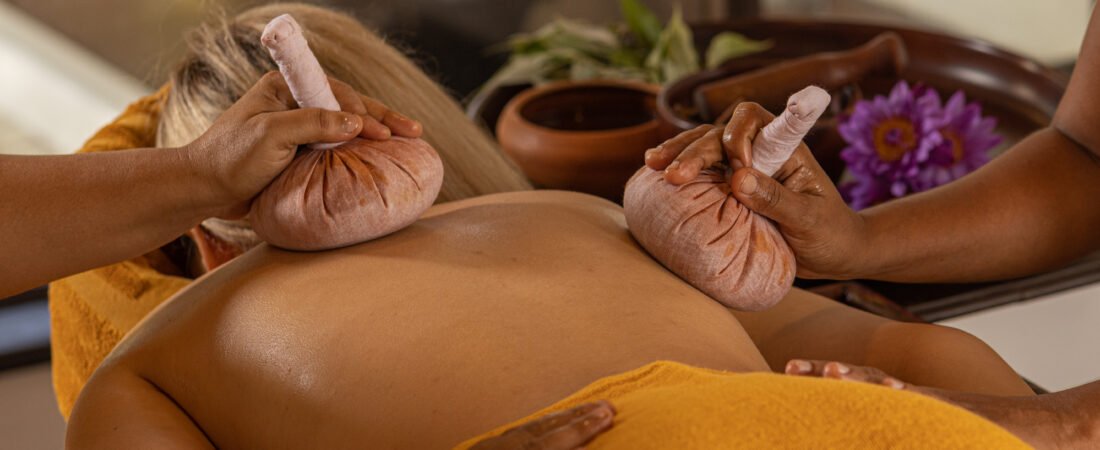
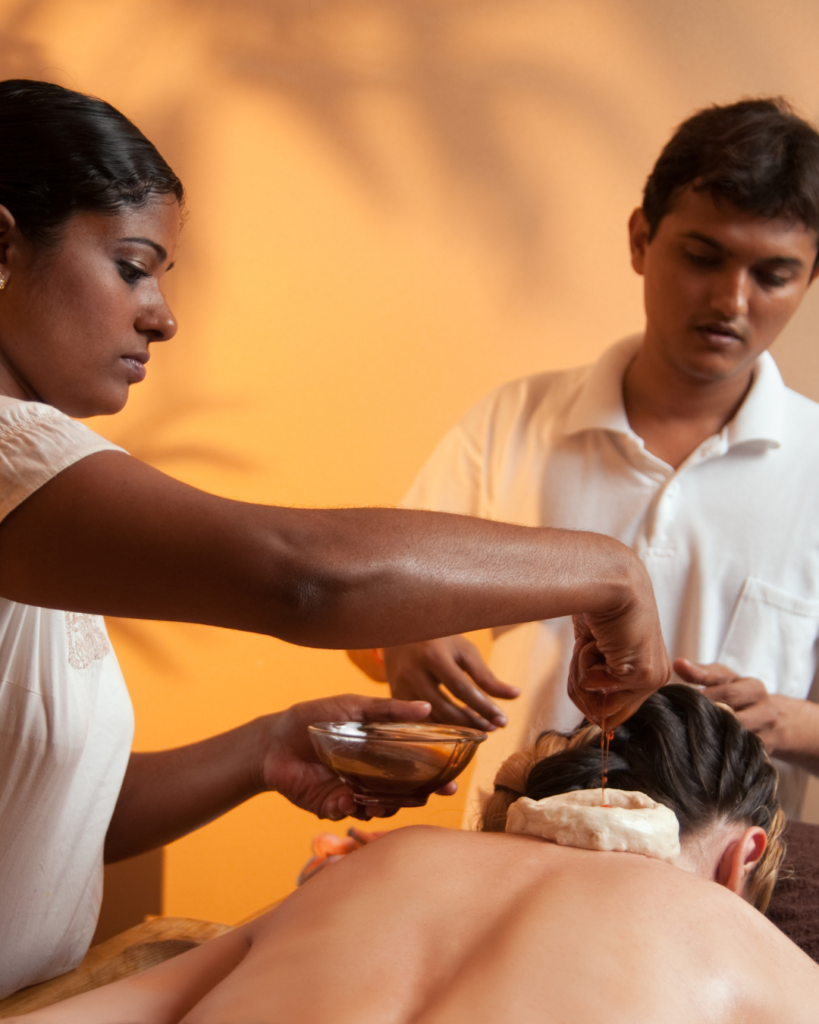
Abhyanga is the daily full-body warm oil massage that forms the foundation of Ayurvedic physical therapy. Performed by one or two therapists simultaneously using rhythmic, synchronised strokes with large quantities of warm medicated oil chosen for your constitution, Abhyanga is far more than a relaxing massage — it is a deep physiological intervention that improves circulation, nourishes the nervous system, mobilises lymphatic drainage, softens and hydrates all tissues, and prepares the body for deeper detoxification. Many guests describe Abhyanga as unlike anything they have experienced in conventional massage — the simultaneity of two therapists working in perfect synchrony creates a profoundly grounding and integrating experience.
Shirodhara — The Healing Stream
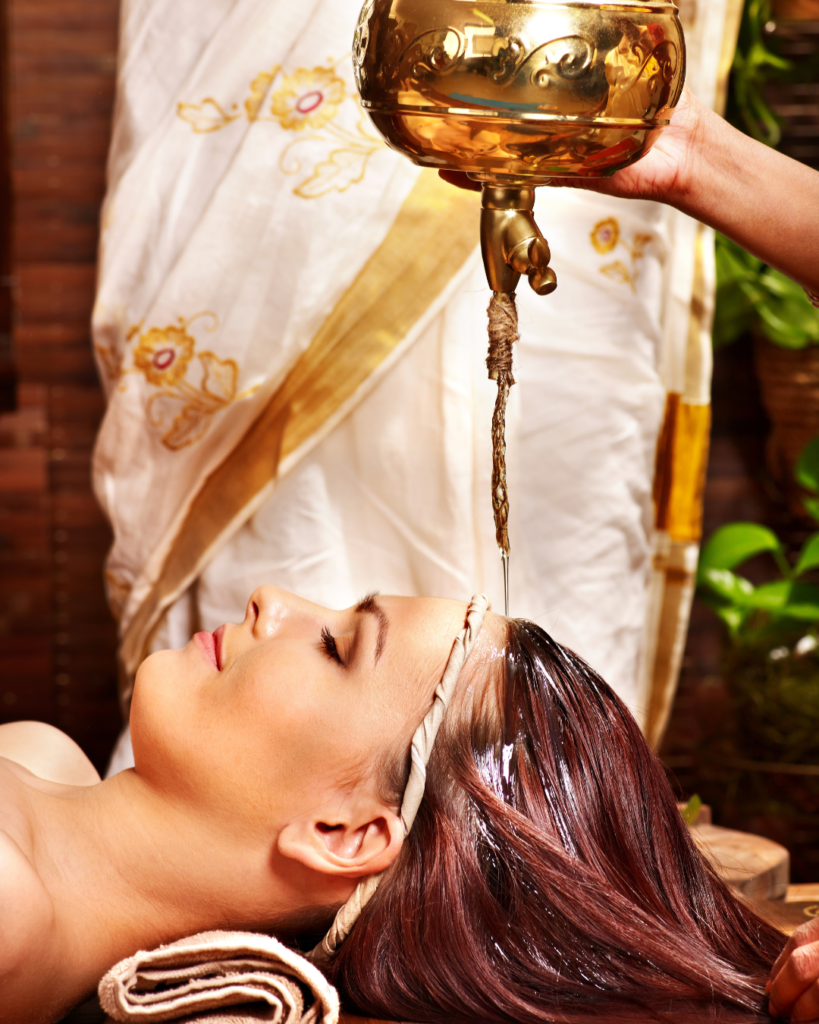
Shirodhara is one of the most powerful and uniquely Ayurvedic treatments in existence — and one that produces responses in guests that are difficult to explain in purely physiological terms. A continuous, steady stream of warm medicated oil is poured over the forehead from a suspended vessel, flowing gently back and forth across the third eye region in a hypnotic, uninterrupted rhythm for thirty to sixty minutes. The effect on the nervous system is extraordinary — Shirodhara induces a state of deep calm that most guests describe as unlike any they have experienced before, even in meditation. It is among the most effective treatments available for anxiety, chronic insomnia, mental exhaustion, post-traumatic stress, and hyperactive nervous system conditions.
Kizhi — Herbal Bolus Therapy
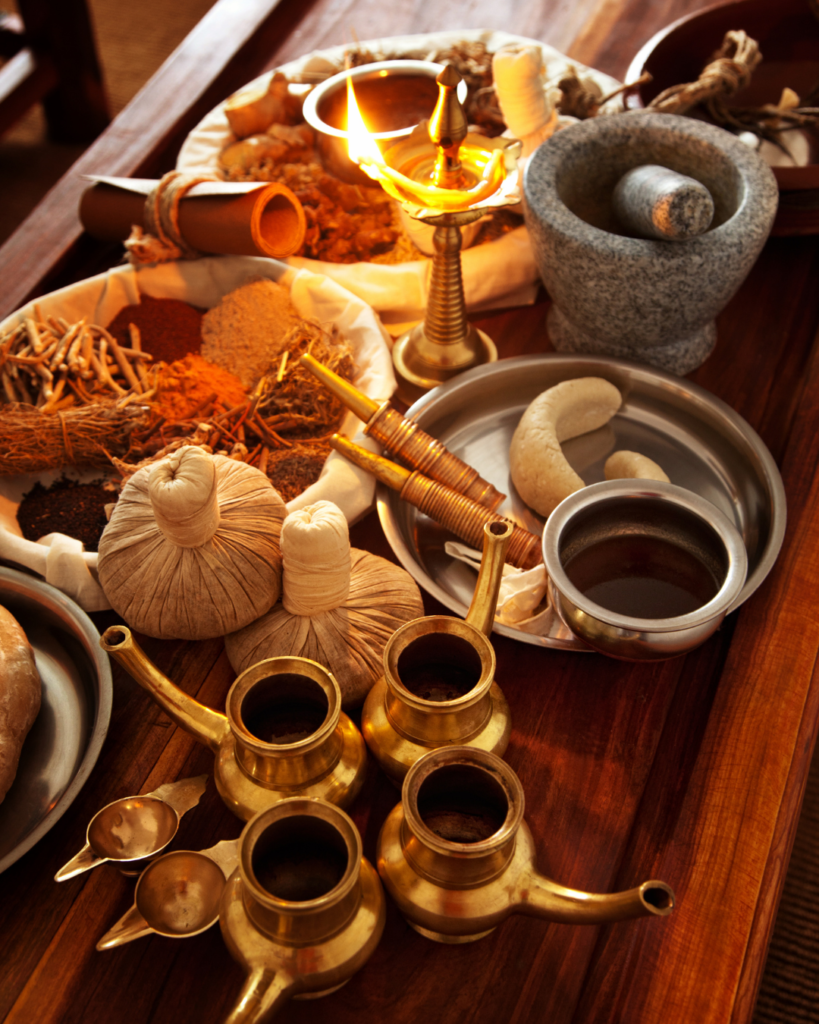
Kizhi involves the rhythmic application of warm cloth boluses filled with medicinal herbs, cooked rice, or sand to specific areas of the body. Different types of Kizhi address different conditions — Ela Kizhi (herb boluses) is deeply effective for musculoskeletal pain and stiffness; Njavara Kizhi (cooked rice boluses) nourishes and revitalises depleted tissues; Mnal Kizhi (sand boluses) reduces inflammation and improves joint function. The combination of heat, herbal action, and therapeutic touch makes Kizhi one of the most effective treatments available for arthritis, chronic back pain, sports injuries, and muscle degeneration.
Netra Tarpana — Nourishing the Eyes
Netra Tarpana is a uniquely Ayurvedic eye treatment that addresses the epidemic of visual system stress created by excessive screen use. A dough dam is constructed around each eye and filled with warm, medicated ghee — the eyes are then bathed in this nourishing medium while the patient gently opens and closes them, allowing the ghee to penetrate and nourish the orbital tissues, the optic nerve, and the surrounding musculature. The relief experienced by guests who work extensively with screens is often immediate and profound. Netra Tarpana is also used therapeutically for dry eye syndrome, early cataract, and progressive visual deterioration.
Udvartana — The Energising Powder Massage
Udvartana is a vigorous dry massage using specially formulated herbal powders — the reverse of Abhyanga in both direction and effect. Where Abhyanga nourishes and grounds, Udvartana stimulates and lightens. The upward, friction-based strokes stimulate lymphatic drainage, reduce excess Kapha, improve skin texture and tone, and create a feeling of lightness and vitality that is particularly beneficial for those carrying excess weight, experiencing sluggishness, or dealing with Kapha-related conditions.
Ayurveda and Yoga — Inseparable Traditions
Ayurveda and yoga emerged from the same Vedic philosophical tradition and have always been understood as complementary dimensions of a single integrated system of health. Ayurveda is the medicine of yoga — providing the physical and physiological foundation from which deep yogic practice can unfold. Yoga is the movement practice of Ayurveda — offering the physical, breathwork, and meditative tools that support and deepen the healing that Ayurvedic treatments initiate.
At the retreats we recommend, yoga and Ayurveda are always offered together — not as separate wellness activities but as integrated dimensions of a single healing approach. The yoga practices are adapted to your specific doshic constitution — a Vata-pacifying practice looks very different from a Kapha-stimulating one.
Who Is Ayurveda For?
The honest answer is: everyone. But Ayurveda retreats are particularly transformative for:
- Those seeking a deeply different kind of wellness experience — one rooted in genuine ancient wisdom rather than the wellness industry’s latest trends
- Those experiencing chronic digestive issues, IBS, or gut health problems that have not responded adequately to conventional treatment
- Those dealing with chronic stress, anxiety, insomnia, or burnout — conditions for which Ayurveda has exceptional therapeutic tools
- Those with inflammatory conditions — skin disorders, joint pain, autoimmune presentations — that Ayurveda addresses through its profound understanding of inflammation and its causes
- Those seeking a genuine understanding of their constitution and the specific dietary and lifestyle approach that will support their long-term health
- Those who have been curious about Ayurveda for years and want a dedicated immersive experience to truly understand it
How to Choose the Right Ayurveda Retreat
Not all Ayurveda retreats are equal — and the difference between an authentic, medically rigorous Ayurvedic experience and a superficial wellness package that uses Ayurvedic terminology without genuine depth is significant. Here is what to look for:
Resident Ayurvedic physicians — not just therapists.
A genuine Ayurvedic program is delivered under the supervision of qualified doctors, not simply trained therapists. Your physician should conduct a comprehensive consultation on arrival — assessing your constitution, your current state of health, and your specific goals — and remain available throughout your stay to monitor your progress and adjust your program accordingly.
Classical treatment protocols.
The treatments should follow classical Ayurvedic methodology, using authentic medicinal oils and herbal preparations prepared according to traditional methods — not commercially produced products with Ayurvedic branding. Ask whether the retreat prepares its own oils and formulations, or sources them from established Ayurvedic pharmacies with verifiable credentials.
Dietary integration.
Ayurvedic nutrition is not an afterthought — it is a core therapeutic component of any genuine program. The kitchen should prepare food according to Ayurvedic principles, tailored to your constitution and adjusted as your treatment progresses. If the retreat offers a standard buffet alongside an Ayurvedic menu, that is a sign that nutrition is not being taken seriously.
A minimum stay requirement for serious programs.
Deep Ayurvedic healing takes time. Any retreat offering a meaningful Panchakarma program in fewer than seven days should be approached with scepticism — the classical preparation phase alone requires seven to ten days. For a genuinely transformational experience, plan for a minimum of fourteen days, and ideally twenty-one.
Clear contraindication screening.
A reputable Ayurvedic retreat will ask detailed questions about your health history before confirming your booking and will be transparent about which conditions are contraindicated for specific treatments. If a retreat accepts your booking without any health screening whatsoever, treat that as a red flag.
Every retreat in our Ayurveda collection has been personally assessed against each of these criteria. We will always match you with a property whose clinical standards and authentic approach are appropriate for your specific goals and health profile.
Every retreat in our Ayurveda collection has been assessed against these criteria, so you can book with confidence. We will always match you with a property whose clinical standards and authentic approach are appropriate for your specific goals and health profile.
Where in the World Can You Experience Ayurveda?
Ayurveda originated in India and remains most deeply rooted there — but several destinations around the world now offer exceptional authentic experiences. Here is a brief guide to the key regions:
Kerala, India is considered the spiritual and clinical heartland of Ayurveda. The Kerala tradition has its own lineage of Ayurvedic families and treatment protocols, and the combination of tropical climate, abundant medicinal herbs, and centuries of unbroken practice makes it the benchmark against which all other Ayurveda destinations are measured. For a serious Panchakarma program, Kerala remains the gold standard.
The Himalayas, India offers a very different Ayurvedic experience — high altitude, extraordinary natural beauty, and retreats like Ananda in the Himalayas that combine rigorous Ayurvedic medicine with yoga and meditation in a setting that is itself deeply therapeutic. Ideal for those who want depth of practice alongside the dramatic landscape.
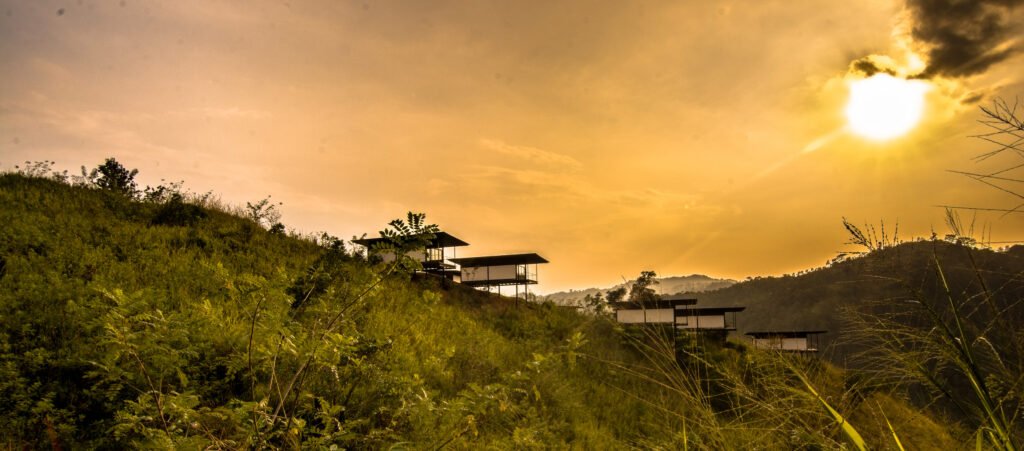
Sri Lanka has developed an exceptional Ayurveda offering over the past decade — drawing on its own Hela Wedakama healing tradition alongside classical Indian Ayurveda. Retreats like Santani and Siddhalepa Ayurveda Resort offer genuine clinical depth in a setting of extraordinary natural beauty. Sri Lanka is particularly well suited to those combining Ayurveda with a broader wellness journey.
Bali, Indonesia offers a more accessible introduction to Ayurvedic principles — blended with Balinese healing traditions in a lush, spiritually rich environment. While Bali is not an Ayurvedic destination in the classical sense, several retreats offer high quality treatments and consultations that make it an excellent starting point for those new to Ayurveda.
Europe has seen a significant rise in authentic Ayurvedic retreats — particularly in Portugal, Austria, and Germany — catering to those who want genuine Ayurvedic medicine without the long-haul flight. While the clinical depth varies, the best European retreats bring in qualified physicians from India and maintain impressively rigorous standards.
Ready to find your perfect Ayurveda retreat?
If this guide has sparked something in you — if you recognise yourself in one of the dosha descriptions, or if the idea of Panchakarma feels like something your body has been waiting for — we would love to help you find the right retreat.
Tell us your constitution, your health goals, and your travel dates — and we’ll match you with the right property.